



Virtual concierge vs hotel chatbot vs AI receptionist: what is the difference?
Three names for tools that talk to guests, and three quite different jobs. What each one does, and which a small hotel, guesthouse or villa really needs.
A hotel chatbot answers questions in a chat window, usually on your website. An AI receptionist answers the phone, checks availability and takes bookings. A virtual concierge looks after guests before and during their stay, on every channel, with practical information and local recommendations. The tools overlap, but they solve different problems, and a small property usually needs a little of all three rather than one of them alone.
Why the names get confusing
Suppliers use these terms loosely, and “AI” has been added to almost everything. A simple question-and-answer widget may be sold as a digital concierge; a phone menu may be called an AI receptionist. The useful way to compare them is not by name but by three questions: where does it answer, what does it know, and what is it allowed to do?
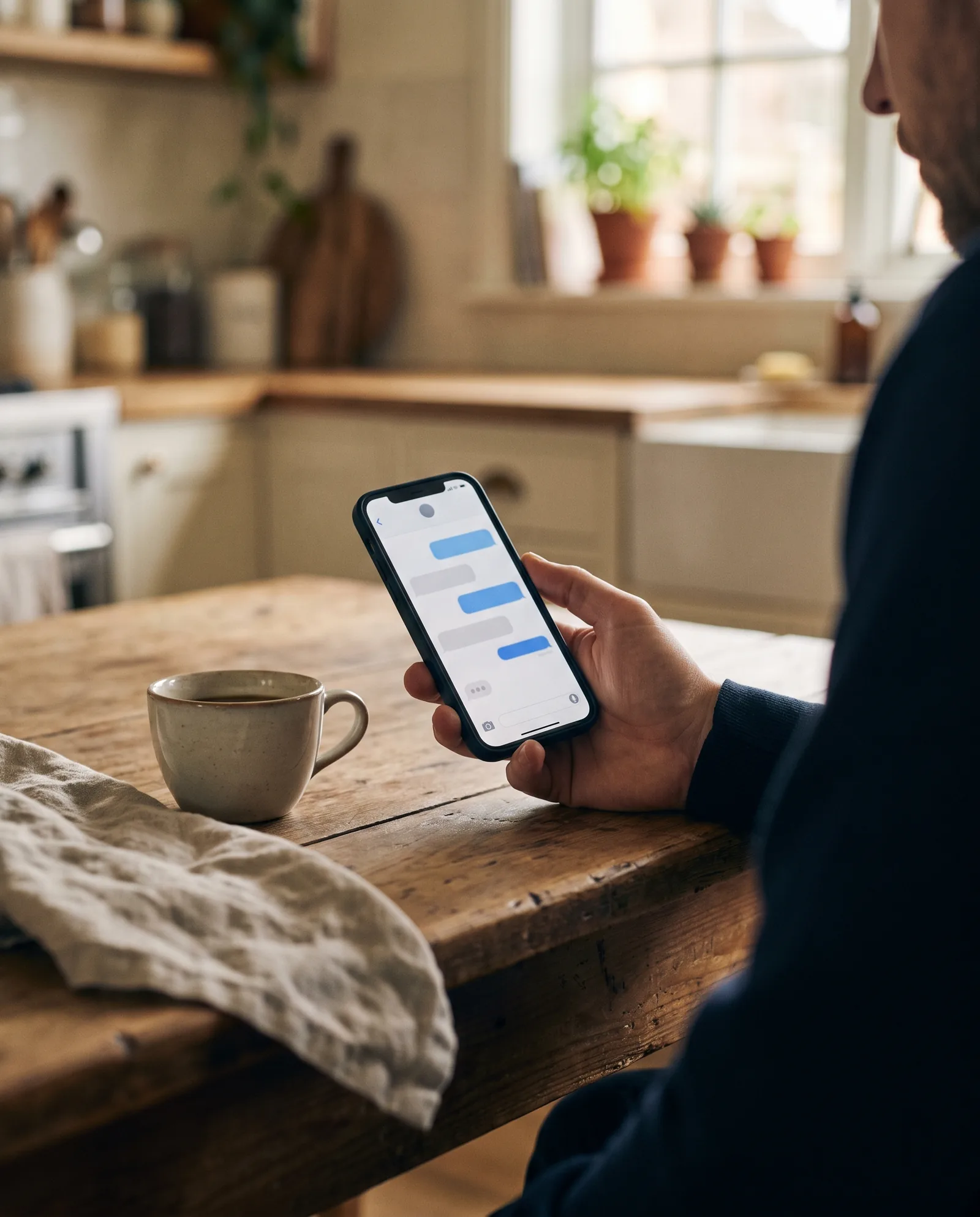
The hotel chatbot
A hotel chatbot is a chat window, most often on your website, sometimes on one messaging app. The simplest ones follow a script of buttons; newer ones understand free text and answer from your information.
- Where it answers: usually one channel, the website.
- What it knows: your FAQs, sometimes your rooms and rates.
- What it does well: catching visitors who are deciding whether to book, at any hour.
- Where it falls short: guests who have booked through a platform rarely visit your website again, and nobody talks to a chatbot on the phone.
If you are looking at this kind of tool, our page on website chat for hotels explains what a good one should do.
The AI receptionist
An AI receptionist is built around the phone. It answers calls in a natural voice, understands what the caller wants and acts on it.
- Where it answers: the phone line, sometimes also chat.
- What it knows: availability, rates, room types, basic house information.
- What it does well: the evening and weekend calls that would otherwise go to voicemail, and turning them into bookings.
- Where it falls short: on its own, it does not follow the guest into WhatsApp or their Booking.com messages after they have booked.
There is more on this in our page on AI phone answering.
The virtual concierge
A virtual concierge, or concierge AI assistant, is defined less by channel than by its job: looking after the guest. It answers the questions that come before arrival and during the stay, wherever the guest happens to write.
- Where it answers: WhatsApp, Instagram, website chat, booking platform messages, ideally the phone too.
- What it knows: the house, the area and your own list of recommendations, plus the guest's booking.
- What it does well: “where should we eat”, “how do we get in after ten”, “can we leave the bags”, in the guest's language.
- Where it falls short: if it cannot take bookings or answer calls, new business still slips through.
Guests do not care what the tool is called. They care that someone answers, on the channel they chose, in words they understand.
Side by side: which one a property needs
Seen together, the differences are clearer:
- A city hotel with a busy website gains most from chat that turns visitors into direct bookings, but its guests will still phone and still write on platforms.
- A guesthouse where the owner also cooks breakfast loses most on the phone, so an AI receptionist matters first, with written channels close behind.
- A villa or apartments sold mostly on Airbnb and Booking.com needs a concierge that answers platform messages with the booking in view, from arrival instructions to restaurant tips.
- Almost every small property needs the same thing underneath: one source of information, one inbox and clear rules for what goes to a person.
That last point is the real test. Three separate tools mean three sets of information to keep up to date and three places to look. If you are still at the beginning, our plain guide to AI concierges covers the basics.
Where Concierva fits
Concierva combines the three jobs. It answers the phone, checks availability and takes bookings like an AI receptionist; it answers website chat, WhatsApp, Instagram and Facebook Messenger; and it replies to Booking.com, Airbnb and Expedia messages as a concierge would, with the booking in view and your own recommendations. One set of property information feeds every channel, and every conversation lands in one inbox. More on the AI concierge page.
Cancellations, refunds, payments and complaints always go to a person, with a summary, and you can start in draft mode, approving every reply before it goes out.
What is the difference between a hotel chatbot and a virtual concierge?
A chatbot usually answers in one place, often the website. A virtual concierge looks after the guest before and during the stay on every channel, with practical information and local recommendations from your property.
Is an AI receptionist the same as a virtual concierge?
They overlap. An AI receptionist is built around the phone and bookings; a virtual concierge is built around guest questions on written channels. A small property usually benefits from both jobs being done by one system.
Do I need three separate tools?
Not ideally. Separate tools mean separate information to maintain and separate places to check. One system that covers phone, chat and platform messages from the same information is simpler to run.
Which one should a small guesthouse start with?
Start where you lose the most: often the phone in the evening, or platform messages that wait for hours. Then add the other channels from the same property information.

What guests ask after 22:00
Late arrivals, key boxes, parking and breakfast: the questions that arrive when nobody is at the desk, and how to answer them well.
Read the article →
The midday rush: a full desk and a ringing phone
Check-ins, check-outs and a phone that will not stop: how to stop losing bookings in the busiest hours of the day.
Read the article →
What you should never leave to an AI at the front desk
Cancellations, refunds, payments, complaints and safety belong to a person. Here is how a good hand-off works: a holding reply and a clear summary.
Read the article →